
EASYCARE REFLECTIONS
Beyond the Dental Chair
Dentistry is about more than teeth.
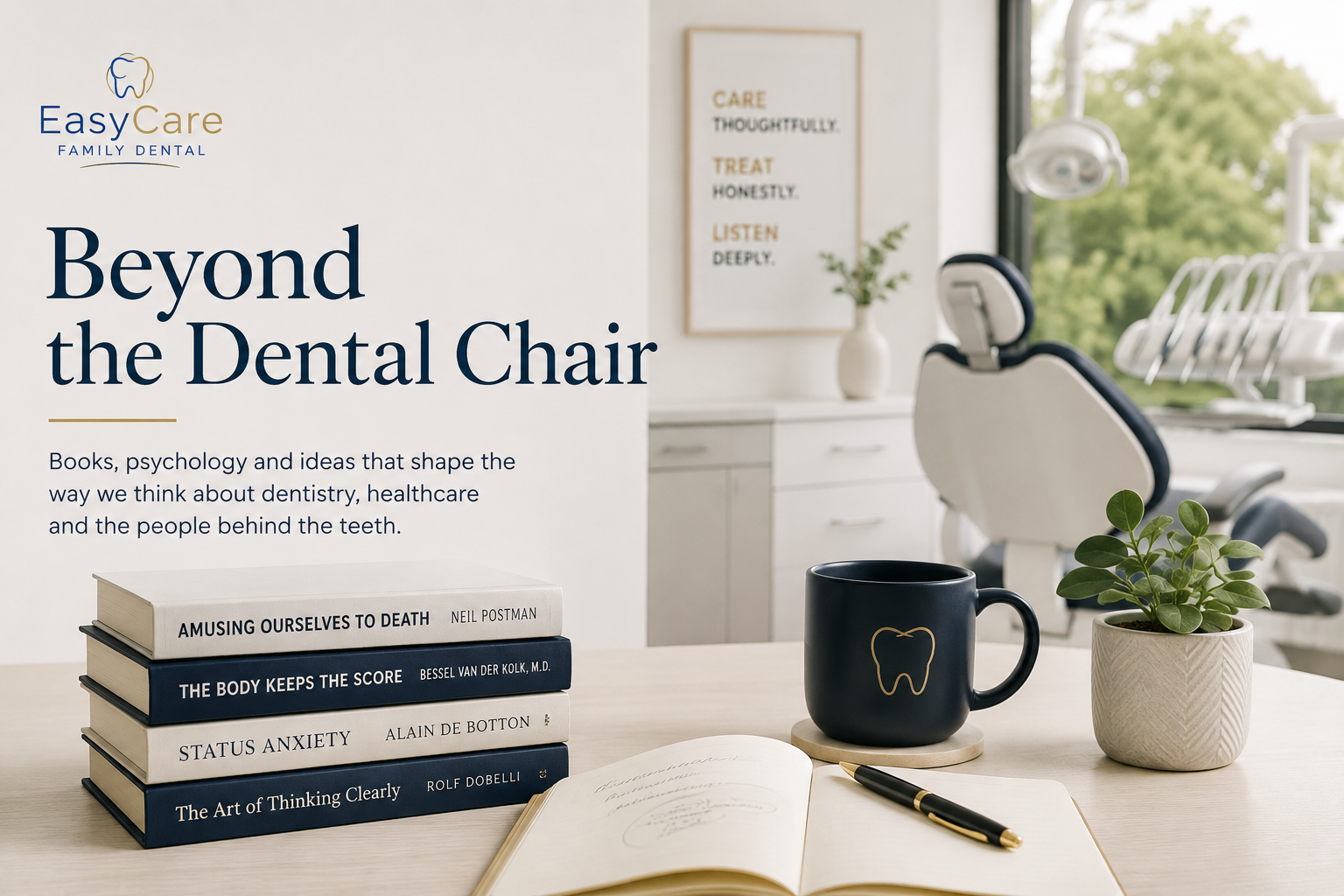
Books, psychology and ideas that shape the way I think about dentistry, healthcare and the human being behind the teeth.
WHY I WRITE THESE REFLECTIONS
Every patient brings more than a dental problem.
We bring our experiences, fears, expectations, ideas about appearance, attitudes toward money and memories of healthcare with us into the dental chair.
Outside dentistry, I spend a lot of time reading and listening to ideas from psychology, philosophy, behavioural science, technology and culture.
Every so often, something makes me stop and ask: what does this mean for dentistry?
Beyond the Dental Chair is where I explore those questions. These aren't book reviews. They're personal reflections on ideas that have made me think differently about patients, healthcare and what good dentistry should look like.
THE COLLECTION
Ideas worth bringing back to the dental chair.
Books become questions. Questions become reflections on the human side of dentistry.
Are We Entertaining Dentistry to Death?
Inspired by Neil Postman's Amusing Ourselves to Death
What happens when dentistry enters a world built around attention, instant transformations, algorithms and before-and-after photographs?
When the Body Remembers the Dental Chair
Inspired by Bessel van der Kolk's The Body Keeps the Score
Why can someone know they're safe at the dentist while their body seems to be telling them something completely different?
Whose Smile Are We Trying to Perfect?
Inspired by Alain de Botton's Status Anxiety
Our teeth may not have changed. But has the world around us changed the smile we're comparing them with?
BEYOND THE BOOKS
The questions I'm interested in.
The books are the starting point. The real subject is the human being sitting in the dental chair.
FROM IDEAS TO CARE
Thoughtful dentistry still comes back to the individual.
Ideas can help us ask better questions, but good dental care still depends on understanding the individual patient, explaining the options clearly and deciding what is appropriate for their health, circumstances and priorities.