Dental Crowns Brisbane - East Brisbane Clinic

Dental Crowns Brisbane

Custom dental crowns in East Brisbane may help protect cracked, heavily filled or root canal-treated teeth and restore strength, function and appearance.

A dental crown, sometimes called a tooth crown or tooth cap, is custom-made to cover the visible part of a weakened tooth. At EasyCare Family Dental, we use digital scans and trusted laboratory support to plan zirconia and porcelain crowns for suitable patients.

Digital scan Zirconia and porcelain options Custom lab-made crowns Free undercover parking
Crown treatment guide

Dental crown treatment in Brisbane: what this guide helps you decide

This guide explains when dental crown treatment may be suitable, when a filling may be enough, how zirconia and porcelain crowns differ, what happens during treatment, and how a crown may relate to root canal treatment or a badly broken tooth.

If you are mainly comparing fees, visit our dental crown cost Brisbane guide. If your tooth is painful, cracked or recently broken, our broken or cracked tooth assessment may be a better starting point.

Quick facts

Quick facts about dental crowns

Common reasons Cracked teeth, large or failing fillings, significant tooth loss and protection after root canal treatment.
Materials Zirconia and porcelain options may be considered depending on the tooth, bite and appearance requirements.
Treatment process Assessment, preparation, digital scanning, laboratory manufacture and final fitting.
Fee guidance An itemised estimate is provided before treatment. See the short crown-cost section below for EasyCare's current fee and the full cost guide.
Location and access East Brisbane, above Seasons IGA, with free undercover parking and Saturday appointments.
Quick answer

When might you need a dental crown?

A dental crown, sometimes called a tooth crown or tooth cap, may be recommended when a tooth is too weak, cracked, heavily filled or structurally damaged to be reliably repaired with a filling alone. Crowns are also commonly considered after root canal treatment, where the remaining tooth may need additional protection.

Large or failing fillings

A crown may help protect a tooth when an old filling keeps breaking or there is limited natural tooth structure left.

Cracked or broken teeth

Some cracked teeth need protection over the weakened biting surfaces to reduce the risk of further fracture.

After root canal treatment

Many root canal treated teeth benefit from a crown to improve long-term structural protection.

Suitability

Do I need a dental crown?

A crown may be suitable if

  • Your tooth has a large filling that keeps breaking.
  • Your tooth is cracked or fractured.
  • A significant portion of the tooth is missing.
  • You have completed root canal treatment.
  • The tooth is structurally weak.

A crown may not always be necessary if

  • The cavity or defect is small.
  • Enough healthy tooth remains.
  • A conservative filling can provide suitable support.
  • The tooth can be monitored safely after assessment.

For some patients, a tooth-coloured restoration may be a suitable alternative. Learn more about our tooth-coloured dental fillings.

Crown materials

Zirconia and porcelain dental crowns

The most suitable crown material depends on the tooth position, remaining tooth structure, bite forces, appearance goals and findings from your dental assessment.

Zirconia crowns

Zirconia is a strong ceramic material that may be suitable for back teeth, heavily restored teeth and areas exposed to greater chewing pressure. Modern zirconia can also provide a natural-looking result when carefully planned and designed.

Porcelain and ceramic crowns

A porcelain or ceramic crown may be considered when detailed colour matching and appearance are particularly important. Different ceramic systems have different strength and aesthetic characteristics.

Which material may suit my tooth?

There is no single crown material that is suitable for every tooth. Your dentist can explain the benefits, limitations and expected appearance of the appropriate options after examining the tooth and assessing your bite.

Treatment process

What happens during dental crown treatment?

The precise process depends on the condition of the tooth, but custom laboratory-made crown treatment commonly includes the following stages.

Examination and planning

The dentist examines the tooth, remaining tooth structure, existing fillings, gum health and bite. X-rays may be recommended where clinically indicated.

Tooth preparation

The tooth is carefully shaped to create suitable space and support for the crown. A foundation filling, sometimes called a core build-up, may be required when significant tooth structure is missing.

Digital scan

A digital scan records the prepared tooth, neighbouring teeth and bite. This information is sent to the dental laboratory to assist with crown design.

Temporary protection

A temporary restoration may be placed while the final crown is being prepared. Your dentist will explain how to care for it between appointments.

Final crown fitting

The crown is checked for fit, bite, contact points and appearance before it is secured. Small bite adjustments may sometimes be required.

Has an existing crown become loose or fallen out?

Read what to do if a dental crown comes off, including when recementation or replacement may need to be discussed.

Timing

What happens if you delay crown treatment?

When a tooth has already become weakened, delaying assessment may increase the risk of further cracking, loss of additional tooth structure, pain, sensitivity, root canal treatment becoming necessary, or extraction becoming the only reliable option.

Further cracking

A weakened tooth may continue to split under chewing pressure, especially around old fillings.

New pain or sensitivity

Cracks and lost tooth structure can allow symptoms to develop or worsen over time.

Compare options

Crown vs filling - which option is right?

Dental fillingDental crown
Repairs part of the tooth.Covers and protects the visible tooth structure.
More conservative.More protective for weakened teeth.
Suitable for smaller defects.Suitable for heavily damaged or cracked teeth.
Usually lower fee.Usually higher fee due to design, laboratory work and appointments.

Learn more about tooth-coloured restorations on our tooth-coloured dental fillings.

Root canal link

Crown vs root canal treatment

A crown and root canal treatment are often used together rather than being alternatives. Root canal treatment addresses infection or inflammation inside the tooth, while a crown may help protect the remaining tooth structure afterwards.

Learn more about root canal treatment in Brisbane. If you are comparing likely fees, visit our root canal cost Brisbane guide.

Tooth saving

Crown vs extraction

When a tooth can be successfully restored for normal use, preserving the natural tooth is often preferred. However, some teeth may be too damaged to restore.

If a tooth cannot be saved, options may include dental implants, dental bridges or dentures.

Cost guidance

How much does a dental crown cost in Brisbane?

At EasyCare Family Dental, a full zirconia crown is typically $2,000 per tooth. Your dentist will provide an itemised estimate after assessing the tooth and confirming the treatment plan.

For details about quote inclusions, possible additional treatment, health-fund questions and fee comparisons, visit our dental crown cost Brisbane guide.

What we commonly see

Common crown situations at EasyCare Family Dental

Postponed cracked teeth

Some patients delay treatment until a crack becomes painful or a piece of tooth breaks away.

Large fillings that fail

Old large fillings can leave the surrounding tooth weak and vulnerable to repeated breakdown.

Root canal treated teeth

Root canal treated back teeth often need protection because the remaining tooth structure may be more fragile.

Local appointments

Dental crown appointments in East Brisbane

EasyCare Family Dental provides dental crown assessments from our East Brisbane clinic, conveniently located for patients from Kangaroo Point, Woolloongabba, Norman Park, Hawthorne and nearby inner Brisbane suburbs.

Clear planning before treatment

Crown appointments include digital scanning, an explanation of suitable alternatives and an itemised estimate before treatment proceeds.

Convenient clinic access

We are located above Seasons IGA at Suite 103 / 33 Lytton Rd, East Brisbane, with free undercover parking, lift access and Saturday appointments.

Calmer environment

A more relaxing setting for nervous patients

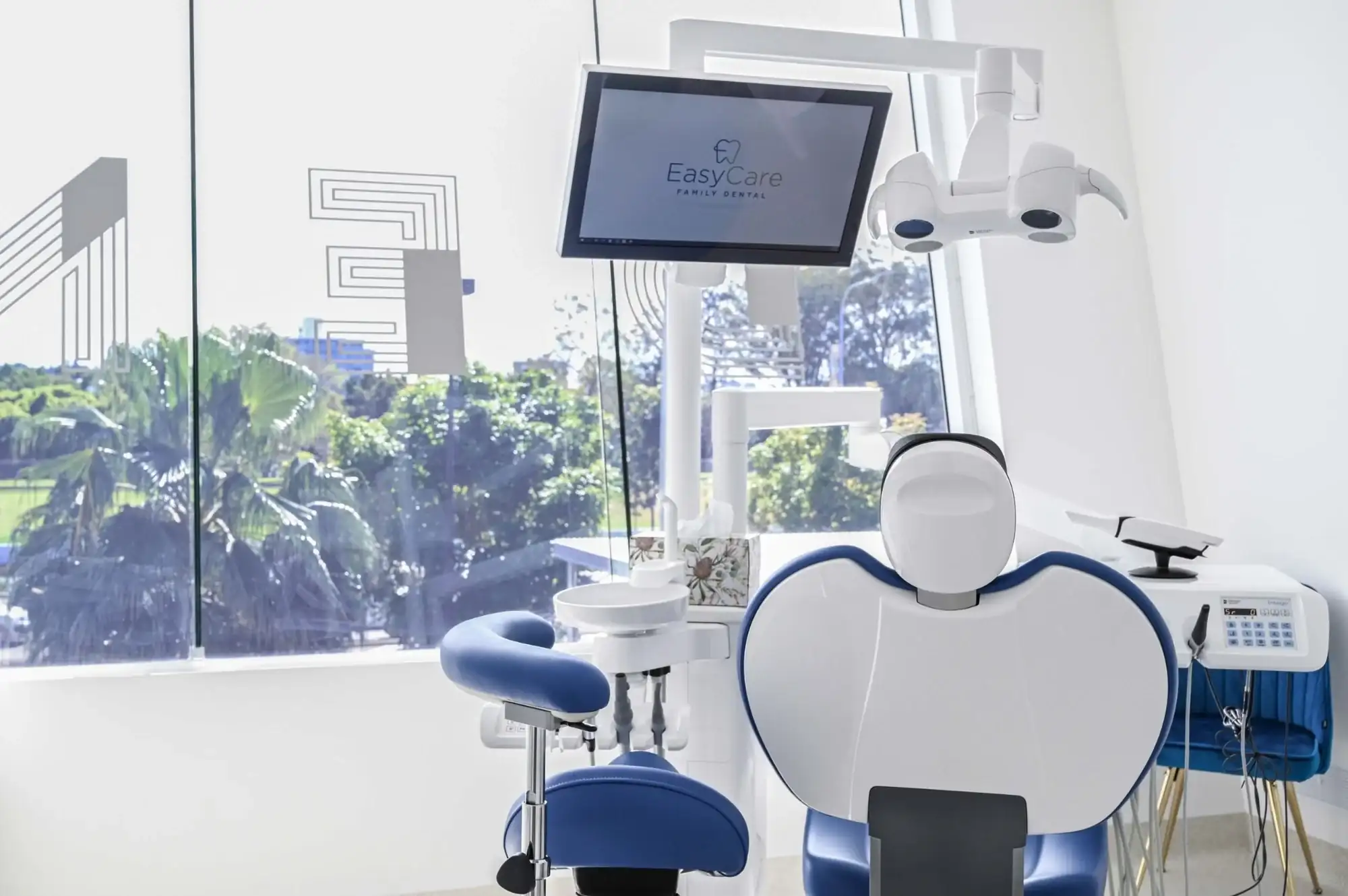
Many patients tell us they feel more relaxed when they can see natural light, blue sky and green trees during their appointment.

Our treatment rooms were intentionally designed to maximise natural light and views of nature, creating a calmer environment for patients who feel anxious about dental treatment.

If dental visits make you nervous, you may also find our dental anxiety guide helpful before your appointment.

Natural light and green tree views from EasyCare Family Dental treatment room
Clinical review

Reviewed by Dr Majid Serpoosh

Restorative care explained by your East Brisbane dentist

Bachelor of Oral Health and Dental Science and Master of Dentistry, Griffith University

Dr Majid's clinical work at EasyCare Family Dental includes restorative dentistry, root canal treatment and assessing whether damaged teeth can be saved and restored for normal use. This page has been reviewed to keep the explanations practical, patient-friendly and consistent with the treatment provided at the clinic.

Meet Dr Majid Serpoosh
FAQ

Common questions about dental crowns

How long does a dental crown take?

A custom laboratory-made crown generally involves an assessment and preparation appointment with digital scanning, followed by a later fitting appointment once the crown has been made. Timing depends on the tooth and treatment plan.

Is a crown better than a filling?

Not always. A filling is more conservative for smaller defects, while a crown may be more suitable when the tooth is heavily damaged, cracked or weakened.

Do I need a crown after root canal treatment?

Many root canal-treated back teeth benefit from crown protection, but suitability depends on the remaining tooth structure, bite forces and tooth position.

Can a broken tooth be crowned?

Sometimes. A dentist needs to assess the fracture depth, remaining tooth structure, nerve health and whether the tooth can be successfully restored for normal use.

Is a tooth crown, tooth cap and dental crown the same thing?

Yes. These terms generally describe a custom restoration that covers the visible part of a weakened or damaged tooth to restore protection, shape and function.

What is the difference between zirconia and porcelain crowns?

Zirconia is known for strength and may be considered for teeth exposed to heavier chewing forces. Porcelain and other ceramic materials may be considered when detailed colour matching and appearance are particularly important. The appropriate option depends on the individual tooth, bite and clinical requirements.

Do you offer same-day or CEREC crowns in Brisbane?

EasyCare Family Dental generally provides custom laboratory-made crowns rather than manufacturing the final crown in the clinic on the same day. We use digital scans to communicate crown design information to our dental laboratory, and a temporary restoration may be placed while the final crown is being prepared. Your dentist can explain the expected appointment timing after assessing the tooth.

How should I care for a dental crown?

Brush the crowned tooth and surrounding gums carefully, clean between the teeth, attend recommended dental reviews and avoid using the crown to bite very hard objects. The tooth underneath and surrounding gum still require regular care.

Need a crown assessment for a cracked, weak or heavily filled tooth?

We can assess your tooth, explain whether a crown, filling, root canal treatment or another option is more suitable, and discuss fees before you decide.