A tooth without pain
Dead Tooth With No Pain: Do You Still Need Treatment?
A tooth can look intact, with no visible hole, yet have a damaged nerve or infection inside and cause no pain. This guide explains how that can happen and when a dental assessment is needed.

Short answer: yes, a dead or necrotic tooth can still need dental treatment even if it does not hurt. Pain is only one sign. A tooth nerve can die quietly, and infection may develop around the root before obvious symptoms appear.
If you can see a hole or cavity, read our hole in a tooth without pain guide. This page focuses on a tooth that may look intact but has a problem inside.
If you have tooth pain, swelling, a deep cavity, a dark tooth, a gum pimple or signs of infection, visit our Root Canal Treatment East Brisbane for assessment and treatment information.
Why can a dead tooth have no pain?
Many people expect a serious dental problem to hurt. In reality, a tooth nerve can become damaged or die without constant pain. Sometimes pain was present earlier and then reduced because the nerve inside the tooth is no longer responding normally.
The nerve may no longer respond
When the pulp tissue inside a tooth becomes badly inflamed or necrotic, the tooth may stop sending normal pain signals.
Infection can develop slowly
Infection around the root may grow gradually. It may be found on an X-ray before the patient feels strong symptoms.
Symptoms can come and go
A tooth may feel quiet for a while, then become painful later if pressure builds, swelling develops or the infection spreads.
What is a dead or necrotic tooth?
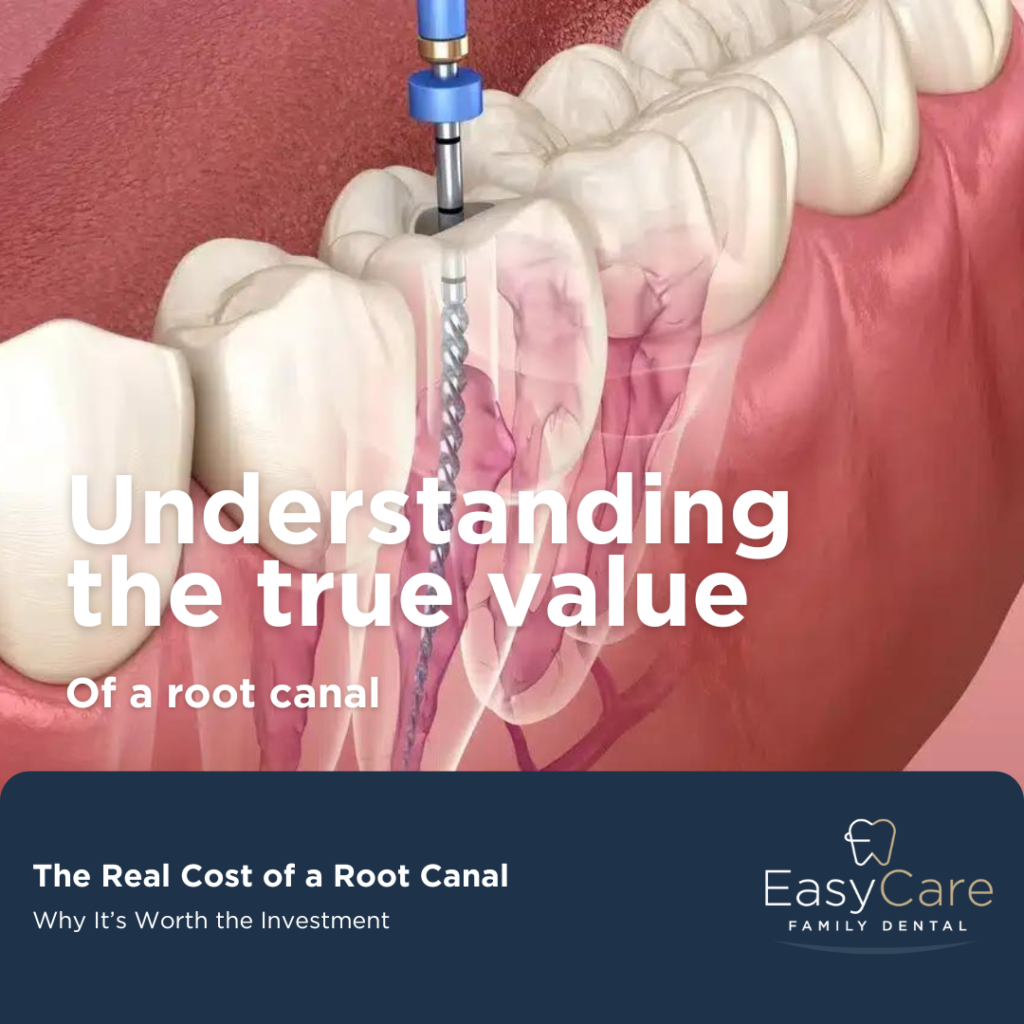
A dead or necrotic tooth means the soft tissue inside the tooth, known as the pulp, has lost vitality. The pulp contains nerves and blood vessels. This can happen after deep decay, trauma, cracks, repeated dental work or long-standing inflammation.
Once the pulp is no longer healthy, bacteria may enter the canal space and infection can spread toward the root tip. This is why a tooth can look mostly normal but still have a hidden problem inside.
Signs a tooth may have lost nerve vitality
A non-vital tooth does not always cause pain, but there may be subtle warning signs. These signs can vary from person to person.
- A tooth that has become darker than nearby teeth.
- A history of previous trauma, even if it happened years ago.
- A deep cavity, deep filling or cracked tooth.
- A small gum pimple near the tooth.
- Bad taste, discharge or intermittent swelling.
- Pain when biting or tapping the tooth.
- A past toothache that disappeared without treatment.
If your main symptom is ongoing toothache, you may also find our toothache guide helpful.
Why is there sometimes no bleeding when the tooth is opened?
When a healthy tooth pulp is entered, bleeding may occur because the pulp contains living blood vessels. If the pulp tissue has died, there may be little or no bleeding inside the canal space.
This can be one sign that the tooth is no longer vital. Your dentist may also use symptoms, X-rays, percussion testing, cold testing and clinical findings to understand what is happening.
Can a silent tooth infection still be serious?
Yes. A silent infection may still affect the bone around the root and may become painful later. Sometimes the body creates a drainage pathway through the gum, which can reduce pressure and make the tooth feel less painful.
If there is swelling, spreading facial pain, fever, difficulty swallowing, difficulty breathing or feeling generally unwell, urgent care is important. If swelling affects breathing or swallowing, call 000 or go to hospital. For more information, visit our dental infection page.
Does a dead tooth always need root canal treatment?
Not always, but many non-vital teeth need treatment if infection is present or likely to develop. The right option depends on whether the tooth is restorable, whether it is cracked, how much tooth structure remains and whether the surrounding bone and gum are healthy enough to support it.
The decision usually comes down to saving or removing the tooth
Your dentist will assess the tooth carefully before recommending a treatment pathway. The aim is to explain your options clearly so you can make an informed decision.
When the tooth may be saved
If the tooth has enough structure and the infection can be managed, root canal treatment may help clean the canal space and allow the tooth to be restored.
When removal may be needed
If the tooth is badly cracked, unrestorable or has a poor long-term outlook, tooth removal may be discussed.
How a dentist checks if a tooth is alive
A diagnosis is not based on one sign alone. Your dentist may combine your symptoms, dental history, visual examination and X-rays with several simple tests.
Cold testing
A cold test can help assess whether the nerve responds normally, strongly, weakly or not at all.
Dental X-rays
X-rays may show deep decay, changes around the root tip, bone changes or previous treatment concerns.
Biting and tapping tests
These tests may help identify inflammation around the root, cracks or bite-related pain.
If root canal treatment is suitable, the tooth may later need a strong final restoration. In some cases, a dental crown may be recommended to help protect the remaining tooth structure.
When should you book an assessment?
You should book a dental assessment if you notice a dark tooth, gum pimple, swelling, deep decay, a cracked tooth, a past toothache that disappeared, or a tooth that feels different from the others.
It is also sensible to have a tooth checked after trauma, even if it feels fine. Some teeth lose vitality slowly after an injury.
- Book an assessment if a tooth has changed colour.
- Book an assessment if there is swelling, a gum pimple or discharge.
- Book an assessment if a tooth had severe pain that suddenly stopped.
- Book an assessment if a deep cavity or crack is visible.
- Seek urgent care if swelling spreads or you feel unwell.
Helpful related pages
These pages explain related symptoms and treatment options in more detail.
EasyCare Family Dental is located at Suite 103 / 33 Lytton Rd, East Brisbane QLD 4169. We are directly above Seasons IGA East Brisbane, with free undercover parking available under Seasons IGA.
Frequently asked questions
These answers explain common concerns about a tooth that may have lost nerve vitality without obvious pain.
Can a dead tooth have no pain?
Yes. A tooth can lose nerve vitality and become non-vital without causing constant pain. Sometimes pain reduces after the nerve tissue has died, but infection may still be present around the root.
What is a necrotic tooth?
A necrotic tooth is a tooth where the pulp tissue inside has died. This may happen because of deep decay, trauma, cracks, repeated dental work or long-standing inflammation.
Do I need root canal treatment if there is no pain?
Not always, but a non-vital or infected tooth often needs assessment. If the tooth is restorable and infection is present, root canal treatment may be one option. If the tooth is not restorable, removal may need to be discussed.
Why did my toothache stop suddenly?
Sometimes a toothache stops because the nerve has become less responsive or has lost vitality. This does not always mean the problem has healed. A dental assessment can help identify the cause.
Can a dead tooth cause swelling later?
Yes. A dead tooth can develop infection around the root. This may lead to swelling, a gum pimple, bad taste, tenderness or pain later.
How does a dentist know if a tooth is dead?
A dentist may use your history, symptoms, visual examination, X-rays, cold testing, tapping tests and biting tests to assess whether the tooth is vital and whether infection is present.
Concerned about a dark, numb or silent tooth?
A dental assessment can help check whether the tooth is still vital, whether infection is present, and what treatment options may be suitable.