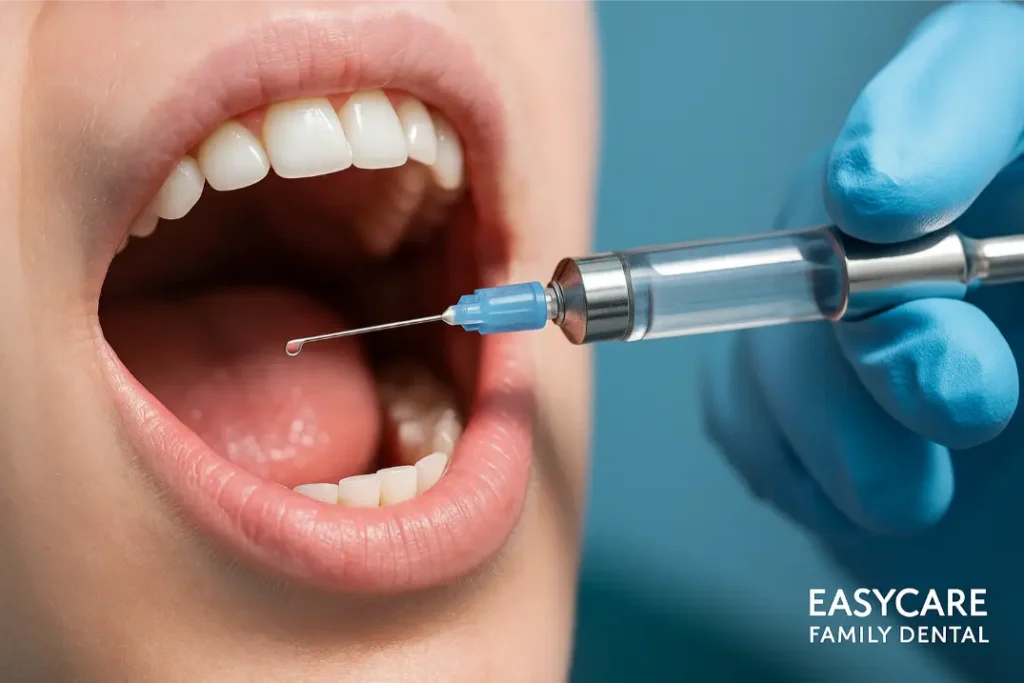
Local Anaesthetic in Dentistry
Gentle, safe and pain-free care in East Brisbane
At EasyCare Family Dental, your comfort comes first. With modern local anaesthetic techniques, most dental treatments are virtually pain-free. Whether you are visiting for a small filling or more complex procedures such as root canals, wisdom tooth extraction or implant placement, our focus is to help you feel relaxed, informed and confident in your care.
What is a Local Anaesthetic?
A local anaesthetic is a safe medication that temporarily blocks nerves from sending pain signals. Local anaesthesia involves placing anaesthetic agents near specific nerves that supply sensation to the oral cavity, allowing dental procedures to be completed comfortably while you remain fully awake.
These anaesthetic agents work by blocking sodium channels in nerve cells during depolarisation, stopping nerve impulse transmission. For effective pain control, local anaesthetics must penetrate the nerve cell membrane, which is influenced by their non-ionised form. The pKa of the anaesthetic can also affect how quickly it works. The effectiveness of local anaesthesia can vary depending on the anaesthetic technique used, the area being treated, and individual patient factors such as anxiety and anatomical variations.
Commonly used local anaesthetics in dentistry include lidocaine, articaine, mepivacaine and prilocaine. Other anaesthetics may be selected based on their chemical properties, potency and patient-specific needs. Choosing a suitable anaesthetic and the appropriate technique - such as infiltration or nerve block - is essential for effective pain management and safety. Studies indicate that the success rate of local anaesthesia techniques like the inferior alveolar nerve block can range from 80% to 85%, but may drop in certain conditions such as irreversible pulpitis.
Types of Local Anaesthetics
Local anaesthesia plays a vital role in ensuring effective pain control and patient comfort. The anaesthetic agents used in dentistry are divided into two main categories:
Amide-type
Most commonly used - including lidocaine, articaine, prilocaine, mepivacaine and bupivacaine. Amides are generally preferred for injections due to their lower risk of allergic reactions and greater stability.
Ester-type
Typically used for topical applications, as they are more likely to cause allergic reactions and are less stable in solution.
Articaine is an amide anaesthetic known for its high lipid solubility, allowing it to diffuse through bone more effectively than other anaesthetics, making it particularly useful for mandibular buccal infiltrations. Bupivacaine is a long-acting local anaesthetic, with effects lasting up to eight hours, but is less commonly used in dentistry due to the infrequent need for prolonged anaesthesia. Prilocaine and mepivacaine are shorter-acting anaesthetics with weaker vasodilatory properties, making them suitable for patients who may have contraindications to adrenaline.
Lidocaine is the most widely used local anaesthetic in dentistry due to its safety and effectiveness, and it is often combined with adrenaline to prolong its effect and reduce toxicity risk. It is important to calculate and not exceed the maximum dose of any local anaesthetic to prevent systemic toxicity and adverse effects.
Topical anaesthetics are often applied to the gums before injections to increase comfort during the anaesthetic application. Anaesthetics with higher pKa values may have a slower onset of action, which can influence clinical decision-making. Selecting the right anaesthetic helps create safe, predictable and comfortable care for every patient.
Preparation for Anaesthetic Injections
Before treatment, your dentist will review your medical history, medications and any allergies. This helps ensure the most appropriate anaesthetic is selected and reduces the risk of complications. Your dentist will also carefully consider the maximum dose of local anaesthetic and assess for any potential complications to support patient safety.
Dental anxiety is common and can significantly affect how patients feel during treatment. If you feel anxious, we encourage open communication so we can tailor your experience with reassurance, sedation options where appropriate, or a suitable anaesthetic technique to help keep you comfortable throughout.
How Local Anaesthesia Works in Your Body
Local anaesthesia is a cornerstone of pain-free dental care, helping you remain comfortable and relaxed during dental procedures. When a local anaesthetic is injected, it targets the nerve cells in the treatment area and temporarily blocks their ability to send pain signals to your brain. This is achieved by the anaesthetic binding to sodium channels in the nerve cell membranes, preventing sodium ions from entering.
Without this movement of sodium ions, nerve impulses cannot travel along the nerve and, as a result, you do not feel pain during your dental treatment. This numbing effect is highly localised, meaning only the area being treated is affected while you remain fully awake and aware.
Whether you are having a minor procedure like a filling or a more complex surgical procedure, local anaesthesia helps make pain management straightforward and effective. The process is safe, predictable, and allows your dentist to perform even complex treatments without causing discomfort. Thanks to advances in local anaesthetic techniques, most dental treatments at EasyCare Family Dental are gentle, controlled and pain-free.
How We Make You Numb - Quickly and Comfortably
Topical gel
Numbs the gum surface before injection.
Infiltration anaesthesia
Local anaesthesia administered by injecting a small amount of anaesthetic near the tooth. This technique is commonly used in the maxilla due to its porous bone structure, allowing the solution to penetrate easily. Accurate needle tip placement is important for effective anaesthesia.
Block anaesthesia
A nerve block involves placing anaesthetic near a main nerve to numb multiple lower teeth, typically in the mandible. Proper needle tip positioning helps reduce complications and improve success.
Gow-Gates technique
A mandibular nerve block that anaesthetises multiple branches of the mandibular nerve, providing anaesthesia to the ipsilateral mandibular hard and soft tissues, the anterior two-thirds of the tongue, and the floor of the mouth. This can be especially useful when a conventional inferior alveolar nerve block does not work well.
Supplemental techniques
These include intraligamentary, intraosseous, intrapulpal and interseptal anaesthesia. Intraligamentary anaesthesia involves injecting the anaesthetic directly into the periodontal ligament space, often producing rapid onset but shorter duration.
Vasoconstrictors like epinephrine are often added to local anaesthetics to reduce blood flow at the injection site, which helps prolong anaesthesia duration, improve haemostasis and reduce systemic absorption of the anaesthetic agent, enhancing both safety and effectiveness.
Numbness usually begins within 2 to 5 minutes and lasts approximately 1 to 4 hours, depending on the anaesthetic agent used.
“We use advanced delivery systems, gentle techniques and a calm, step-by-step approach to ensure every patient feels comfortable and in control.”
Why Some Anaesthetics Include a Vasoconstrictor
Vasoconstrictors such as adrenaline help the anaesthetic last longer and reduce bleeding during treatment. They work by narrowing blood vessels, allowing the anaesthetic to remain in the area for longer. By reducing blood flow, vasoconstrictors also decrease the systemic absorption of anaesthetic agents, which enhances both the safety and effectiveness of local anaesthesia in dentistry.
- Adrenaline - improves duration and bleeding control.
- Felypressin - a suitable alternative when required.
The correct dosage is carefully calculated based on your health, ensuring safe and effective treatment.
“At EasyCare Family Dental, we carefully select anaesthetic options based on your health history.”
Pain Management with Local Anaesthetics
Effective pain management is essential for a positive dental experience, and local anaesthetics play a vital role in achieving this goal. By blocking pain signals at their source, local anaesthetic injections allow dentists to perform a wide range of dental procedures - from simple fillings to complex surgical treatments - without causing pain. For example, the inferior alveolar nerve block is a common technique used to numb the lower jaw, including the mandibular molars, helping keep you comfortable throughout your treatment.
The dentist injects a carefully selected local anaesthetic solution near the area to be treated, temporarily preventing nerve impulses from sending pain signals to your brain. This numbing effect can last for a few hours, allowing pain-free treatment even during longer or more complex procedures. The choice of anaesthetic and technique is tailored to your individual needs, taking into account your medical history, current medications, and any health conditions such as hepatic or renal impairment.
Patient safety is always the top priority. Your dentist will monitor your blood pressure and other relevant signs during the procedure and is trained to recognise and manage rare complications such as allergic reactions or cardiac arrhythmias. Allergic reactions to local anaesthetics are very rare, but can range from mild symptoms to severe anaphylaxis, particularly with ester anaesthetics like benzocaine. Most side effects, such as numbness or tingling at the injection site, are mild and temporary. In rare cases, nerve damage or prolonged numbness can occur, but these risks are minimised with proper technique and care.
Failure to achieve anaesthesia can occur due to anatomical variations, inadequate technique, patient anxiety or local infection. Inferior alveolar nerve blocks can be less effective in certain conditions such as irreversible pulpitis.
Haematomas may develop if a needle punctures a blood vessel during injection, causing soreness, facial swelling and trismus. Applying pressure to the area helps stop bleeding and reduce complications. Intravascular injection of local anaesthetics can lead to transient symptoms such as palpitations, visual disturbances and headaches, which typically resolve without intervention.
Methaemoglobinaemia is a rare but serious complication that can occur if the maximum dose of prilocaine or ester anaesthetics is exceeded. This condition reduces oxygen delivery to tissues and requires immediate medical attention.
Local anaesthetics are generally safe for most patients, including pregnant women and those with certain medical conditions, though special precautions may be needed. For anxious patients, nitrous oxide can be used alongside local anaesthetics to provide additional relaxation. The anaesthetic wears off within a few hours, so it is important to avoid chewing or drinking hot liquids until full sensation returns to prevent accidental injury.
At EasyCare Family Dental, we are committed to providing pain-free, gentle care for every patient. Our dental team uses modern anaesthetic techniques and monitors your comfort closely, helping even nervous patients undergo dental treatment with confidence and ease.
Safety, Side Effects and Our Standards
Local anaesthetics are very safe when administered by trained professionals. However, it is important to be aware of potential complications and adverse effects which, while rare, can include allergic reactions, haematomas, intravascular injections, nerve injuries and transient facial palsy. Complications from local anaesthesia are usually mild and temporary, such as temporary sensory changes or minor allergic reactions.
Rare complications such as prolonged numbness, bruising, sensitivity, needle fracture and serious allergic reactions can also occur and must be recognised and managed appropriately. Our team is fully trained to recognise and manage these potential complications and medical emergencies promptly, ensuring patient safety at all times.
Common Mild Effects
- Slight soreness at the injection site.
- Temporary numbness of lips, tongue or cheek.
- Mild swelling or tingling.
Rare Complications
Rare complications may include prolonged numbness, bruising or sensitivity. Serious reactions such as allergic responses or systemic effects are extremely uncommon. Our team follows strict safety protocols and is fully equipped to manage any situation.
Pregnancy and Local Anaesthetic
Dental treatment can be safely carried out during pregnancy with appropriate precautions. We coordinate with your GP or obstetric team when needed to ensure safe and comfortable care.
“Your comfort, safety and peace of mind guide every decision we make.”
Medical Conditions and Local Anaesthesia
Certain medical conditions may influence how anaesthetic is used. For example, patients with cardiovascular conditions or liver and kidney concerns may require adjustments to ensure safety.
By sharing your medical history, we can tailor treatment and provide safe, effective pain management.
General Anaesthesia vs Local Anaesthesia
Local anaesthesia numbs a specific area while you remain conscious and able to interact with your dentist throughout the procedure. In contrast, general anaesthetic is reserved for complex or extensive dental surgeries and induces full unconsciousness, requiring professional monitoring due to its risks. For most dental treatments, local anaesthesia is the safest and most effective option, allowing you to remain aware and responsive during your care.
Nitrous Oxide Sedation
Nitrous oxide, or laughing gas, helps reduce anxiety and allows you to feel calm during treatment. With nitrous oxide sedation, patients feel more relaxed and at ease, which is particularly beneficial for those with dental anxiety. It works quickly and wears off within minutes, making it a safe and convenient option.
Aftercare Tips
Simple aftercare steps
- Avoid chewing until numbness wears off to prevent accidental biting of lips, cheeks or tongue.
- Avoid hot drinks while numb.
- Avoid alcohol and smoking temporarily, as these can affect circulation and prolong anaesthetic effects.
- Use a cold compress if needed to reduce swelling.
- Contact us if numbness lasts longer than expected.
Driving and activity
It is generally safe to drive after local anaesthesia, but patients should follow their dentist’s advice, especially if a procedure affects their ability to use their hands, feet or eyes. Most patients recover sensation within a few hours and can return to normal activities, though individual responses may vary.
If numbness persists beyond the expected duration, patients should contact their dentist for further evaluation.
“We check every patient’s recovery carefully - your comfort after treatment matters.”
Frequently Asked Questions
Will I feel pain?
You may feel pressure or vibration, but not sharp pain.
Why do lips stay numb longer?
Soft tissues retain anaesthetic longer than teeth.
Is adrenaline safe?
Yes, it is safe for most patients at dental doses.
Can I drive?
Yes, local anaesthetic does not affect alertness.
Our Honest Approach
We believe in transparency, gentle techniques and doing what is right for every patient. Seeing you leave comfortable and confident is our ultimate goal.
EasyCare Family Dental
Suite 103 / 33 Lytton Rd
East Brisbane QLD 4169
Phone: (07) 3523 3333
After-hours: 0478 000 333
Email: info@easycarefamilydental.com.au
Book Online: easycarefamily.portal.dental
Located directly above Seasons IGA with free undercover parking.
Nervous About Dental Anaesthetic?
If you feel unsure, a simple check-up allows us to explain everything clearly and tailor your care.
Conclusion
Local anaesthesia is a cornerstone of modern dentistry, providing safe and effective pain relief. At EasyCare Family Dental, we ensure every treatment is comfortable, controlled and tailored to you.

Nervous About Dental Anaesthetic?
Local anaesthetic is used to keep dental treatment comfortable and controlled. If you feel anxious about numbness, injections or previous experiences, the best first step is a dental checkup and clean where your dentist can assess your needs and explain how anaesthetic will be used for your specific situation.
Many common treatments such as dental fillings and root canal treatment rely on local anaesthetic to ensure the procedure is comfortable and predictable.
If you are experiencing significant pain, swelling or worsening symptoms, you may need emergency dental care to diagnose and manage the issue promptly.
Suite 103 / 33 Lytton Rd, East Brisbane QLD 4169 - Directly above Seasons IGA with free undercover parking.