EasyCare oral care guide
Oral care products: what belongs in your daily routine?
A toothbrush, fluoride toothpaste and a way to clean between your teeth do most of the work. Here are products we show patients at EasyCare, what each can do and where personal advice matters more than a brand name.
These are examples, not a shopping list for everyone. Your age, tooth decay risk, gum health, dexterity and any restorations can change what suits you.
The pictured EasyCare picks
Three products and how to use them
These are examples of products we discuss with patients. A product is most useful when it fits your mouth and you use it consistently; ask us before adding specialist products to your routine.
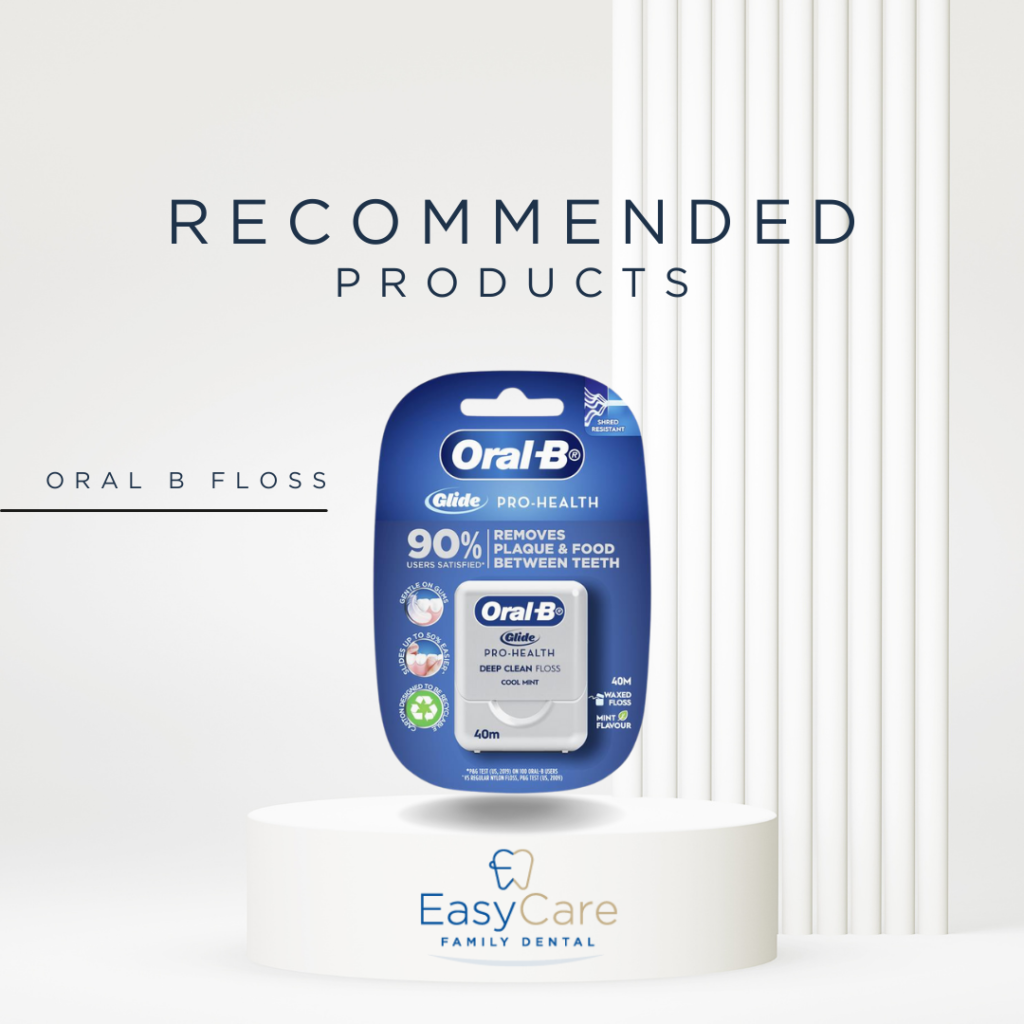
Oral-B floss
Floss can reach the sides of teeth a brush misses. Gently curve it around each tooth and move below the gumline without snapping it into the gums. If you have wider spaces, a correctly sized interdental brush may be easier.
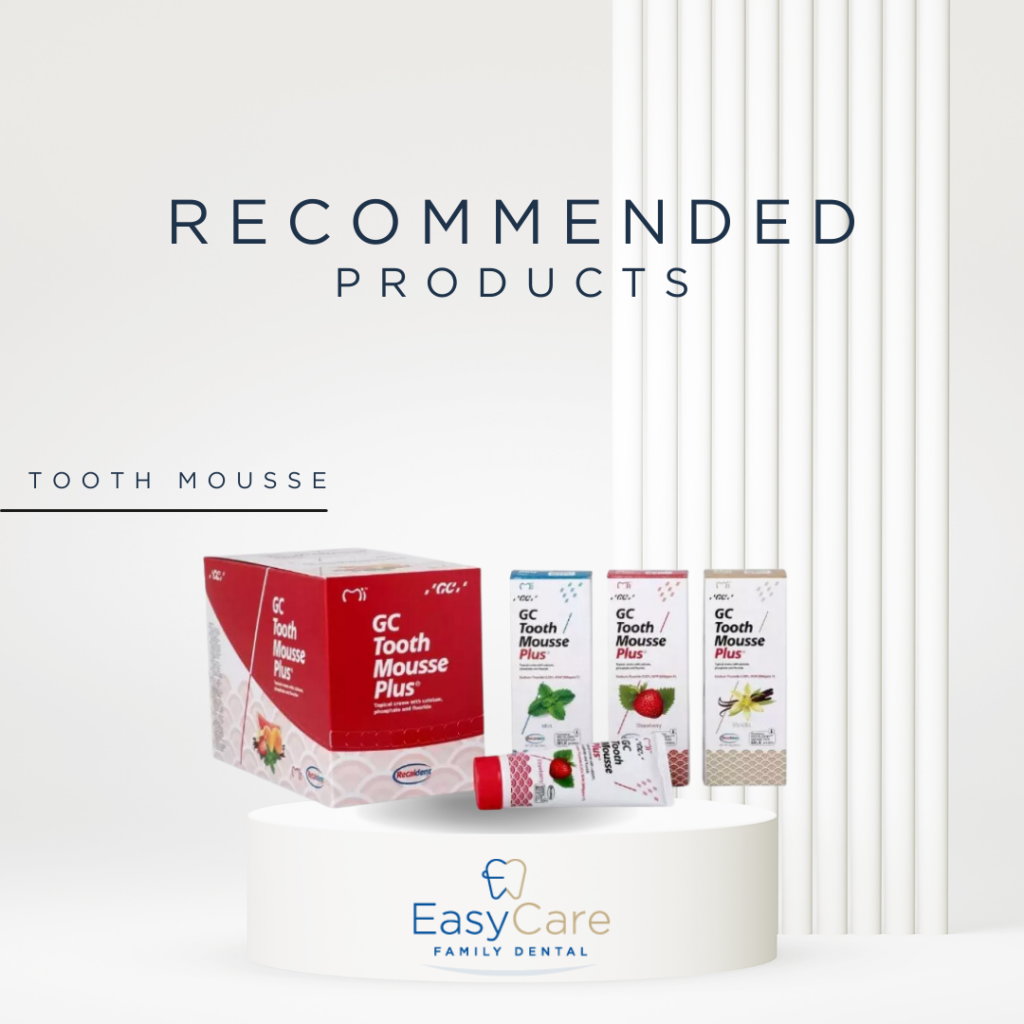
GC Tooth Mousse Plus
This fluoride-containing cream is a possible additional product for selected people after a dental assessment. It does not replace twice-daily fluoride toothpaste or repair a cavity. Check suitability and application instructions with your dentist first.
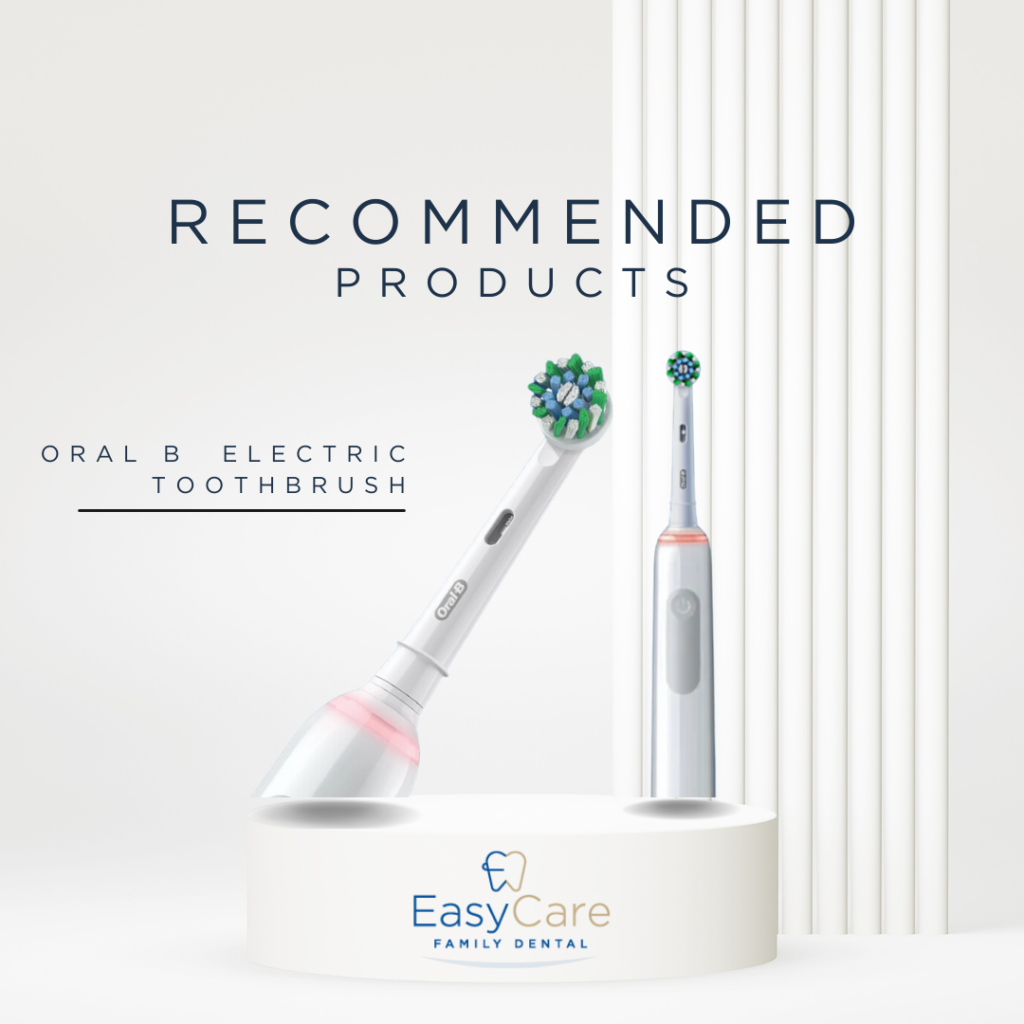
Oral-B electric toothbrush
A powered brush may help if you find manual brushing difficult or tend to rush. Guide the head slowly around every tooth and along the gumline; do not scrub or press hard. Replace the brush head when the bristles wear.
Tooth Mousse Plus contains milk-derived CPP-ACP and fluoride. The manufacturer’s instructions say not to use it with a suspected or proven milk-protein, benzoate or soybean allergy and not to use it for children aged six or younger. Tell us about allergies before use.
A routine you can maintain
What matters more than the label
Brush twice a day with fluoride toothpaste
Spend about two minutes cleaning the outside, inside and biting surfaces with a soft brush. Angle the bristles gently towards the gumline and avoid forceful scrubbing. Spit out excess toothpaste; follow your dentist’s advice about rinsing and any prescribed fluoride strength.
A small-headed manual brush can work well. Electric brushing can be helpful for some people, but careful technique and regular use remain essential.
Clean between teeth daily
Choose floss, floss picks or interdental brushes according to the spaces between your teeth and what you can use comfortably. Slide floss down each side of a tooth rather than cutting into the gum. An interdental brush should fit without being forced.
If you have a bridge, orthodontic appliance or implants, ask us which tools and technique suit those areas.
The comparison patients ask about
Oral-B vs Colgate: which should you choose?
For toothpaste, look first for an appropriate fluoride concentration and a formulation you can use regularly. The brand alone does not tell us which paste best fits your risk of decay, sensitivity, dry mouth or age. Whitening and charcoal claims deserve particular care; our guide to whitening toothpastes covers those separately.
For toothbrushes, choose a soft head that reaches your back teeth comfortably. An electric brush can make a difference for some people, and studies show modest average improvements in plaque and gum inflammation compared with manual brushing. It is still possible to brush well with either type. Features such as a timer and pressure feedback can help if you rush or brush too hard; compare the actual model, not just the logo.
The product images show EasyCare examples, not a claim that one brand is clinically best for every patient. Evidence: Cochrane review of powered and manual toothbrushes.
Personalise the basics
Children, sensitivity and specialist products
For children
Children need an age-appropriate amount and strength of fluoride toothpaste and help with brushing until they can do a thorough job themselves. Recommendations can differ by age and individual decay risk. Ask us which paste and amount fit your child; the children’s dental care page explains visits and prevention.
For sensitivity or frequent decay
A sensitivity toothpaste may reduce symptoms over time, but pain from a cracked tooth, a cavity or gum recession needs a diagnosis. If you have new white spots, repeated cavities or a dry mouth, we can assess whether additional fluoride or a product such as Tooth Mousse Plus is appropriate. Products cannot replace a filling or treatment of active disease.
Bleeding when you first clean between teeth can reflect inflamed gums or rough technique. Persistent bleeding, swelling or loose teeth warrant an examination. Ask us about daily cleaning steps; read about gum disease assessment and treatment options if symptoms continue.
Quick answers
Common questions about oral care products
Do I need both floss and an electric toothbrush?
An electric brush cleans exposed tooth surfaces, but it does not replace cleaning between teeth. Floss or another suitable interdental tool is still part of a complete routine.
Is Tooth Mousse Plus for everyone?
No. It is an adjunct for selected patients, has age and allergy restrictions, and should be used as directed after professional advice.
Can a product stop a toothache?
It may ease some sensitivity, but it cannot identify or treat the cause of a toothache. If pain is persistent, worsening or associated with swelling, arrange a dental assessment.
How often should I have a clean?
The interval depends on your oral health and risk. Your dentist can recommend a schedule; see our dental cleaning page for appointment details.
Advice for your mouth
Not sure what belongs in your routine?
Bring the products you use to your next EasyCare visit. We can show you where plaque collects, check your technique and recommend an approach based on your teeth and gums.