Are All Dental Fillings The Same?
A filling should protect your tooth, feel comfortable and last as well as circumstances allow. The result depends on the remaining tooth, the seal, the bite and the material. Here is what to ask before treatment.
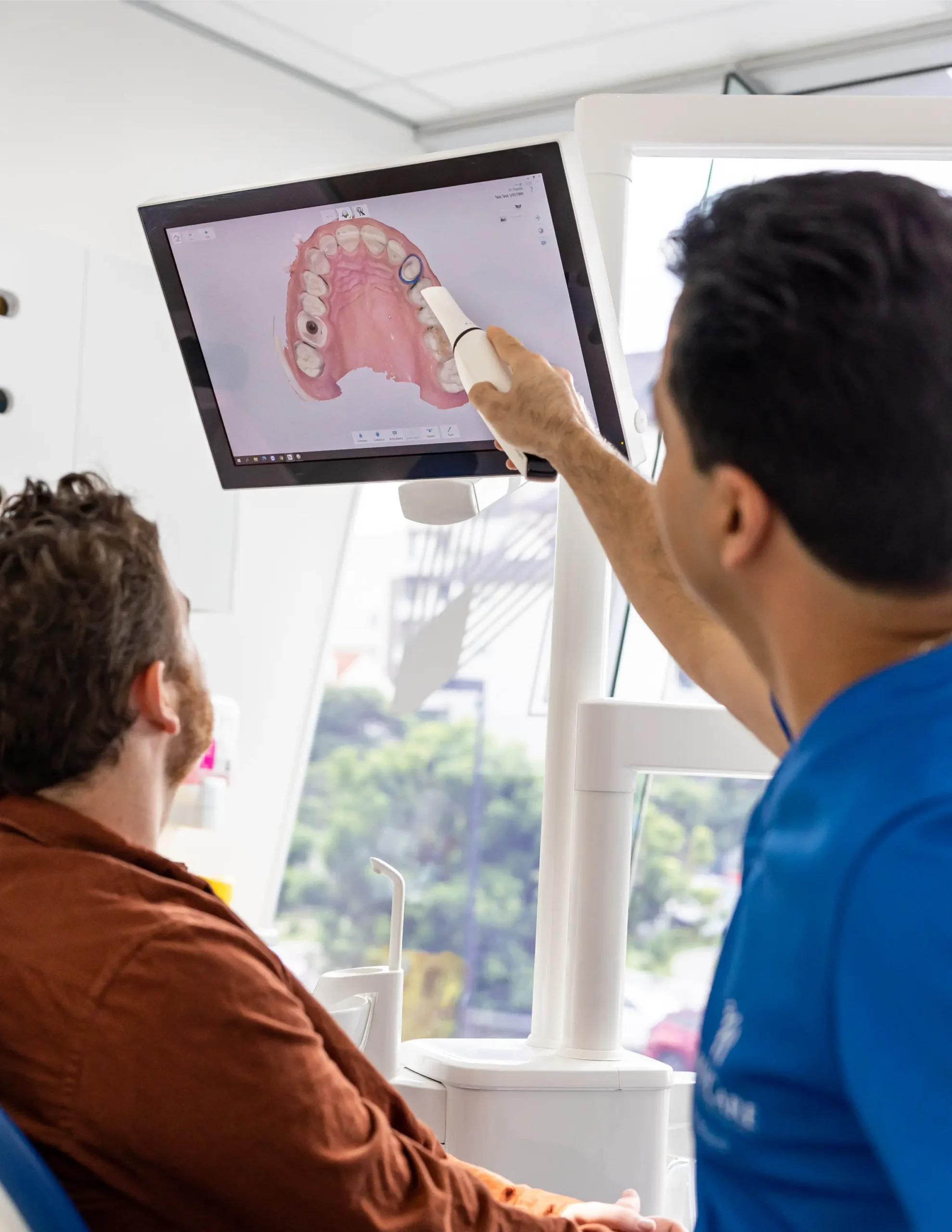
Preserve. Seal. Protect.
A quality filling is not simply about placing material into a tooth. It is about preserving healthy tooth structure, sealing bacteria out and protecting the tooth long term wherever reasonably possible.
Quick answer
What makes a quality filling?
In simple terms, a quality filling is not only about how the tooth looks immediately afterward. A well-planned restoration also aims to preserve healthy tooth structure, seal bacteria out effectively, manage cracks and bite forces, reduce future weakening and support long-term tooth survival.
Dental filling quality
Are all dental fillings really the same?
Not necessarily. Two fillings may look very similar immediately after treatment but perform very differently over time.
The long-term outcome may depend on the amount of remaining healthy tooth structure, whether hidden cracks are present, the quality of the seal around the filling, the dentist’s technique, moisture control during bonding and long-term bite management.
Modern adhesive dentistry increasingly focuses on preserving healthy tooth structure while creating strong seals that help reduce bacterial leakage and future breakdown.
Tooth structure
The amount of healthy enamel and dentine left behind can affect the long-term strength of the tooth.
Seal quality
A reliable seal helps reduce the risk of bacteria leaking underneath the filling over time.
Bite forces
Grinding, clenching and heavy bite pressure can affect how well a restoration lasts.
Conservative care
Modern dentistry has become more conservative
Many patients are surprised to learn that modern dentistry is often less about aggressive drilling and more about preserving healthy tooth structure.
Older approaches frequently involved removing larger amounts of tooth structure to ensure all decay was aggressively removed. Modern minimally invasive dentistry has evolved significantly over recent decades.
The FDI World Dental Federation supports minimally invasive approaches aimed at preserving natural tooth structure, maintaining teeth functional for life, reducing unnecessary weakening of teeth and avoiding unnecessary nerve exposure where possible.
Simple patient takeaway
Modern dentistry is increasingly focused on preserving tooth structure wherever reasonably possible, while still removing decay and sealing the tooth properly.
The seal concept
Why the seal of a filling matters so much
One of the most important concepts in modern restorative dentistry is the seal.
A filling may look perfectly fine from the outside, but if bacteria slowly leak underneath over time, the tooth can continue breaking down silently beneath the restoration.
This is one reason why bonding quality, moisture isolation, crack assessment and careful technique matter.
This does not mean decay is ignored
It means modern dentistry increasingly focuses on preserving tooth vitality where possible, reducing unnecessary trauma, strengthening and sealing teeth predictably, and maintaining long-term tooth health.
The goal is no longer simply to remove as much tooth as possible. The goal is to preserve, seal and strengthen the tooth long term.
Why restorations fail
Why some fillings last 15 years - and others fail earlier
Patients often ask why an old filling failed quickly. There is rarely one single reason.
Tooth factors
- Deep hidden cracks
- Very large cavities
- Weakened tooth structure
- Previous repeated repairs
Bite and habit factors
- Heavy grinding or clenching
- Heavy bite forces
- Food trapping
- Delayed treatment
Restoration factors
- Bacterial leakage
- Moisture contamination during placement
- Aging restorations
- Seal breakdown over time
Sometimes the filling itself is not actually the main problem. The tooth may already have been significantly compromised before treatment even began.
Understanding deeper damage
Why do some fillings later become root canals?
Patients are often surprised when a tooth that previously had a filling later develops severe pain or requires root canal treatment.
In many cases, the problem is not simply the filling itself. The tooth may already have been significantly weakened, cracked or deeply affected before treatment began.
Deep decay, bacterial leakage, repeated replacement fillings, heavy bite forces and hidden cracks can sometimes irritate the nerve over time. In some situations, the nerve may eventually become inflamed or infected even when the original filling appeared successful initially.
How a filling is placed
Does dentist technique actually matter?
Yes. Restorative dentistry is highly technique-sensitive. Modern tooth-coloured fillings involve many precise steps that may influence long-term outcomes.
Planning
- Conservative decay removal
- Preserving healthy enamel and dentine
- Crack assessment
Bonding
- Isolation from saliva and moisture
- Bonding procedures
- Layering techniques
Finishing
- Bite adjustment
- Polishing
- Contouring for comfort
Even relatively small differences in technique may affect sensitivity, bacterial leakage, fracture resistance, durability and long-term tooth survival.
Materials and planning
Does the brand of material matter?
Materials can matter, but materials alone do not determine success. Modern restorative materials have improved significantly in bonding technology, aesthetics, strength and wear resistance.
Material is only one part
Diagnosis, planning, sealing ability and preservation of tooth structure may be equally or even more important than the material brand itself.
Why good materials can still fail
Even excellent materials may fail if the tooth is heavily cracked, bacteria leak underneath the restoration, moisture contamination affects bonding or bite forces are excessive.
Good dentistry is usually a combination of careful diagnosis, conservative philosophy, precise technique, appropriate materials and long-term planning.
Before treatment
Questions patients can ask before treatment
Patients do not need to become dental experts, but asking thoughtful questions can help improve understanding and confidence.
About the tooth
- Is the tooth cracked?
- How large is the filling?
- Is the tooth already weakened?
About future risk
- Is there a risk the nerve may later become inflamed?
- Would a crown eventually be needed?
- What happens if I delay treatment?
About options
- Is grinding or clenching affecting the tooth?
- Are there more conservative options available?
- What is the recommended next step?
Early intervention
Why early treatment usually leads to simpler treatment
Modern minimally invasive dentistry strongly emphasises early detection and conservative management wherever appropriate.
When treatment is delayed, decay may spread deeper, cracks may worsen, teeth may weaken further, infections may develop and more complex treatment may become necessary.
Decision support
When a filling may no longer be enough
Sometimes a tooth becomes too weakened for a filling alone.
This may occur when large portions of tooth structure are missing, cracks are present, repeated replacement fillings have weakened the tooth, the tooth has undergone root canal treatment or biting forces are excessive.
Why stronger protection may be discussed
Research on restoring endodontically treated teeth increasingly highlights the importance of the coronal seal and protecting weakened tooth structure after treatment.
In these situations, more protective restorations may sometimes be recommended to help preserve the tooth long term. These may include crowns, indirect restorations, cuspal coverage restorations or other strengthening approaches.
When to check
When it may be worth having a tooth assessed
Some signs that may justify an assessment include:
- Pain when biting
- Recurring sensitivity
- Cracks around fillings
- Dark staining around restorations
- Food trapping
- Rough or chipped fillings
- Old large fillings
- Teeth that feel weaker over time
- Tooth pain that keeps returning
Early assessment may sometimes help identify problems before they become larger or more complex.
EasyCare philosophy
Modern dentistry is increasingly about preservation
Modern restorative dentistry is increasingly focused on preserving healthy tooth structure, conservative treatment, strong long-term sealing, preventing unnecessary damage and maintaining teeth functional for life where possible.
A quality filling is not simply about placing material into a tooth. It is about protecting and preserving the tooth in a way that supports its long-term strength, health and function.
Common questions
Quality dental fillings FAQs
Can a poor filling lead to root canal treatment later?
In some situations, bacteria leakage, cracks or deep existing decay may eventually irritate or infect the nerve over time.
How long should fillings last?
There is no exact lifespan. Some fillings may last many years, while others may fail earlier depending on the tooth condition, bite forces, cracks, oral hygiene and long-term maintenance.
Are white fillings stronger?
Different materials have different advantages depending on the situation. Strength depends not only on the material itself, but also on tooth structure, bonding quality and case selection.
Do all large fillings eventually need crowns?
Not always. Some teeth may remain stable for many years, while others may require additional protection depending on cracks, bite forces and remaining tooth structure.
Can deep cavities still be saved without root canal?
Sometimes yes, sometimes no. It depends on factors such as nerve health, symptoms, infection and how compromised the tooth already is. Modern dentistry increasingly focuses on preserving tooth vitality conservatively wherever reasonably possible.