
Am I Suitable for Dental Implants?
Most adults with missing teeth can be suitable for dental implants, but it depends on your gum health, bone support, medical history and lifestyle factors. This guide explains what matters and what can often be improved before treatment.
Short Answer
You may be a good candidate for dental implants if you have healthy or treatable gums, enough bone support and are able to maintain good oral hygiene. Even if you have bone loss, gum disease, diabetes, smoking habits or teeth grinding, implant treatment may still be possible after proper assessment and planning.
This page focuses only on suitability. If you want a broader overview of treatment options, visit our main Dental Implants East Brisbane page.
Who Is Typically Suitable for Dental Implants?
Implant suitability is based on more than the missing tooth. Your dentist needs to consider your gums, bone, bite, health and long-term maintenance ability.
Healthy or treatable gums
Implants need healthy surrounding gum tissue. If gum disease is present, it usually needs to be stabilised first.
Enough bone support
The implant needs enough bone for support. If bone is limited, bone grafting may be discussed as part of planning.
Good daily cleaning habits
Long-term implant success depends on daily cleaning and regular professional maintenance.
Factors That May Need Extra Planning
Some factors do not automatically rule you out, but they may change the treatment plan, timing or maintenance needs.
Smoking or vaping
Smoking can affect healing and gum health around implants. Reducing or stopping smoking before and after implant treatment can improve the outlook.
Diabetes
Well-controlled diabetes may still allow implant treatment, but poor blood sugar control can increase healing and infection risks.
Bone loss
If there is not enough bone, implant treatment may need extra planning. Read more about bone grafting before dental implants.
Teeth grinding or heavy bite forces
Grinding can place extra pressure on implant restorations. A night guard or bite management plan may be recommended.
Gum disease history
Patients with previous gum disease may need closer maintenance, professional cleaning and ongoing monitoring.
Medical history and medications
Some medical conditions and medications can affect healing. Your dentist may need to coordinate care or adjust timing before treatment.
Can These Issues Be Improved First?
Yes. Many patients who are not immediately ready for implants can become suitable after preparation. The goal is to create a healthier foundation before implant placement.
Preparation may include
- Gum treatment before implant planning
- Bone grafting where bone support is limited
- Improving oral hygiene routines
- Smoking reduction or cessation support
- Medical optimisation where needed
- Night guard planning for grinding
Understanding the treatment pathway
If you want to understand the stages involved, visit our Dental Implant Procedure guide.
If cost is one of your main concerns, visit our Dental Implant Cost Brisbane page.
How We Assess Dental Implant Suitability
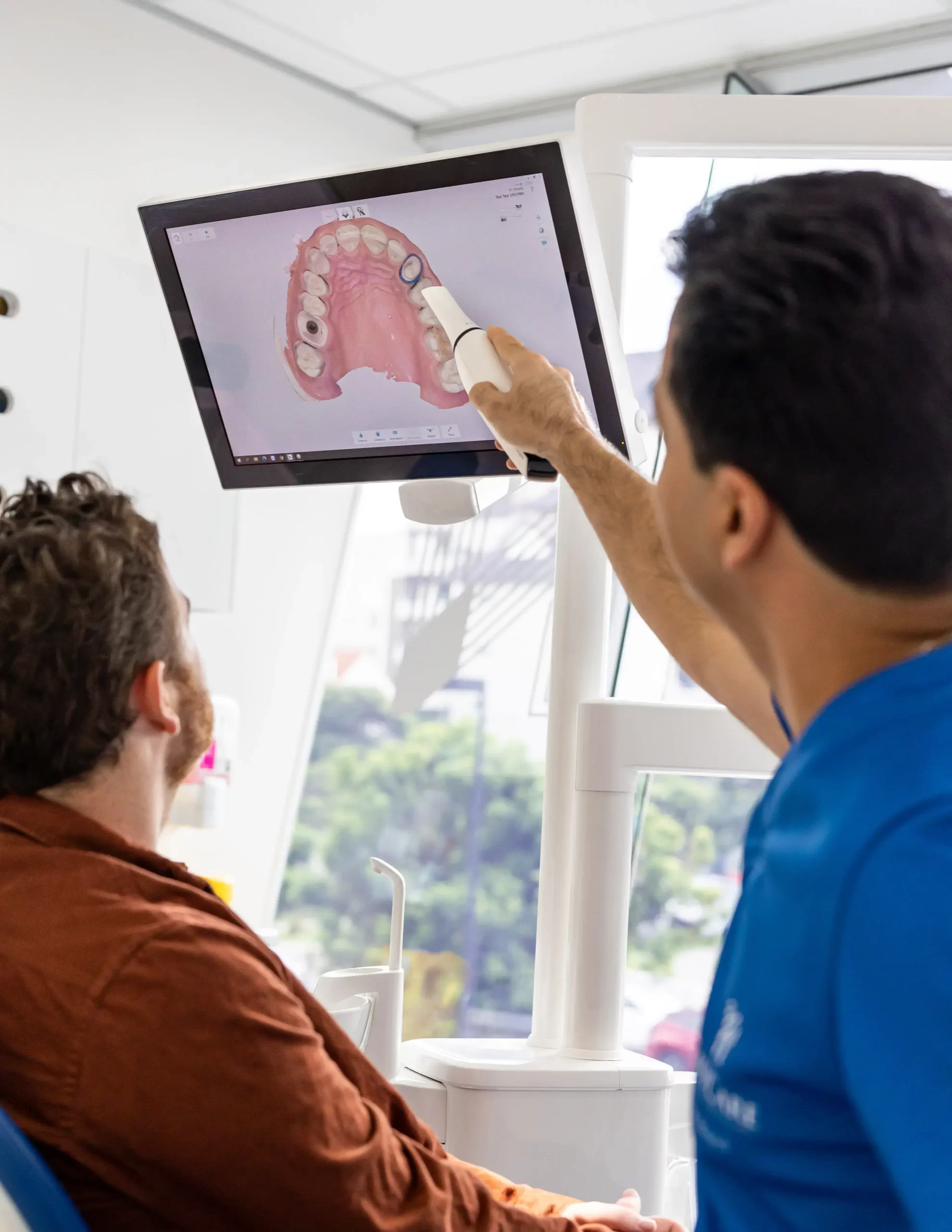
A proper implant assessment should look at the full picture, not just the missing tooth. This helps us explain whether implants are suitable, whether preparation is needed, and what alternatives may be worth considering.
1. Clinical examination
We assess your gums, teeth, bite, missing tooth area and cleaning access.
2. 3D imaging where needed
CBCT imaging may help assess bone levels, nerves, sinus position and implant planning options.
3. Clear treatment plan
You receive clear information about options, timing, cost factors, risks and alternatives before deciding.
When Dental Implants May Not Be the Right Choice
Implants are not suitable for every situation. In some cases, another option may be safer, more practical or more appropriate for your current health, budget or timing.
Implants may need delaying if
- Active gum disease is present
- Infection needs urgent treatment first
- Bone support needs rebuilding
- Medical factors need stabilising
- Smoking risk is high and healing may be affected
Another option may be discussed if
- You prefer to avoid surgery
- You need a lower upfront cost option
- You need a faster temporary solution
- Your health history makes implant surgery less suitable
- A bridge or denture may better match your goals
If you are comparing options, read our guide: Are Dental Implants Really Worth Your Money?
How This Page Supports Your Implant Decision
This page is about suitability only. If you are ready to compare treatment options, cost factors or the full process, these pages may help.
Main implant page
For a full overview of implant options, suitability, costs and treatment stages, visit Dental Implants East Brisbane.
Procedure guide
For the treatment stages, visit our Dental Implant Procedure guide.
Cost guide
For pricing factors, visit Dental Implant Cost Brisbane.
Bone grafting
For limited bone support, visit Bone Grafting Before Dental Implants.
Dental Implant Candidate FAQs
Am I too old for dental implants?
Age alone is usually not the main issue. General health, gum health, bone support and healing ability are more important than age.
Can smokers get dental implants?
Some smokers can still have implants, but smoking can increase risks. Your dentist will explain how smoking affects healing and long-term maintenance.
Can I have implants if I have gum disease?
Active gum disease usually needs to be treated and stabilised first. Healthy gums are important for implant maintenance.
Do I need bone grafting before implants?
Not always. Bone grafting is only considered when there is not enough suitable bone to support the implant safely or ideally.
Can I have implants if I grind my teeth?
Grinding does not always prevent implants, but bite forces may need to be managed with careful planning and sometimes a night guard.
How do I know if I am suitable?
The best way is through an implant assessment, clinical examination and imaging where needed. This allows your dentist to explain your options clearly.
Not Sure If You’re Suitable?
We can assess your gums, bone support, bite and health factors, then explain whether implants are suitable and what your next steps may be.
EasyCare Family Dental - Suite 103 / 33 Lytton Rd, East Brisbane QLD 4169 - above Seasons IGA with free undercover parking.